
30 Days to a Better Dog: Celebrating Responsible Dog Ownership Month

September is Responsible Dog Ownership Month, and at Run Free K9, we believe responsible ownership goes far beyond keeping a dog fed, vaccinated, and loved.
It means learning how to communicate with the dog in front of you. It means providing structure, enrichment, exercise, boundaries, training, advocacy, and opportunities to build confidence. Most importantly, it means recognizing that training isn't something you do for six weeks and then check off your list.
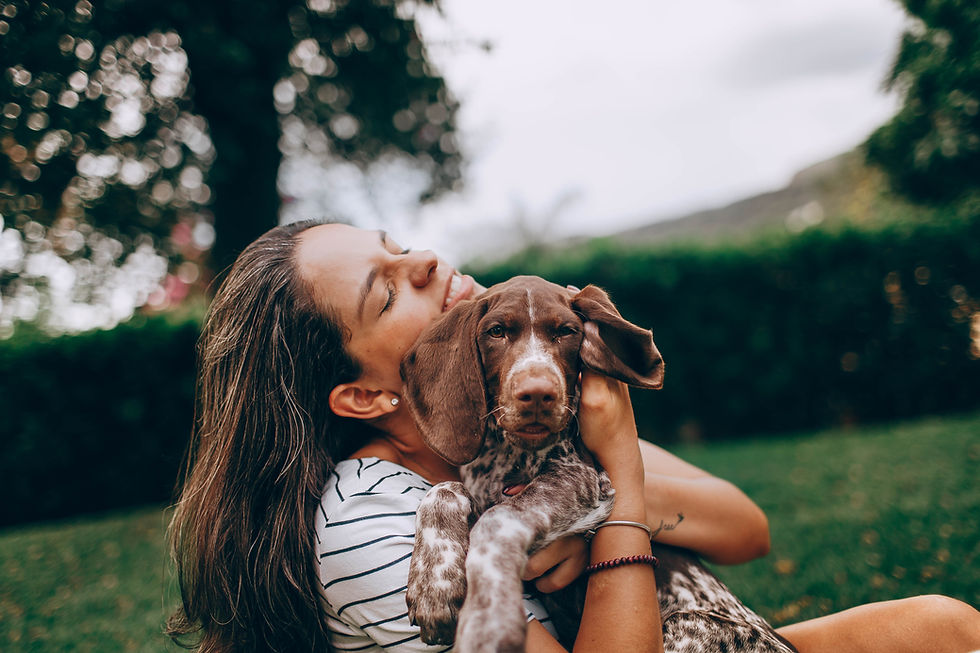
Training is a lifestyle.
That's why this September, we're celebrating with our 30 Days to a Better Dog Challenge — 30 simple training concepts that can help create better communication, better behavior, and a stronger relationship between you and your dog.
You don't need an hour-long training session every day. Many of these exercises can be incorporated into things you're already doing: feeding breakfast, opening the front door, taking a walk, greeting guests, going to the park, or simply relaxing together.
Small changes. Big results. A better life together.
WEEK 1: BUILD THE FOUNDATION
Day 1 — Learn Your Markers
Clear communication starts with consistent language.
Use marker words so your dog understands exactly what you're telling them:
YES = You got it! Reward is being given.
GOOD = Keep doing what you're doing. This is helpful for when working on duration and distance of a command. This is not a release or reward, more of a verbal aknowledgment that they are doing well and to keep doing it.
BREAK = You're finished and free!
The more consistent your communication becomes, the easier it is for your dog to understand what you want.
Day 2 — Name = Attention
Your dog's name shouldn't become background noise.
Say their name once. When they look at you, mark and reward the engagement.
Over time, their name should mean:
"Hey! Pay attention to me."
That foundation becomes incredibly important when distractions are added later.
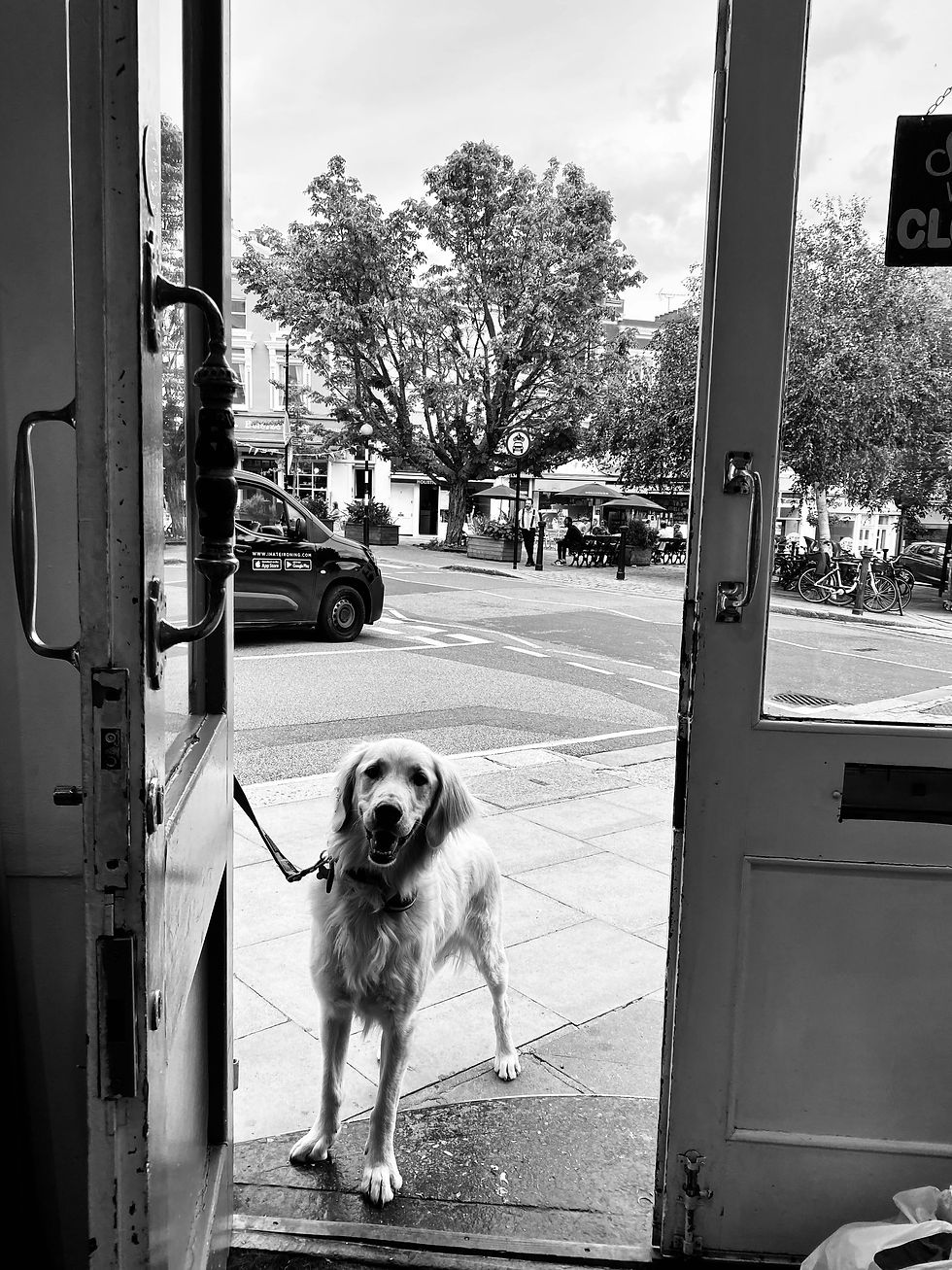
Day 3 — Make Them Wait at Doors
Doors are one of the easiest places to incorporate impulse control into everyday life.
Ask your dog to wait before going through doors, gates, their crate, or getting out of the car. Release them with a word such as "Break."
If they try to bolt through the doorway, simply close the door and try again. They learn that rushing doesn't make the door open — calm behavior does.
Day 4 — Teach an Off Switch: The Art of Doing Nothing
One of the most overlooked skills in dog training is the ability to do absolutely nothing.
Some dogs are constantly looking for entertainment. Others become anxious when they're somewhere unfamiliar. Take your dog somewhere appropriate and simply exist together.
Sit outside a store. Relax at a dog-friendly restaurant. Sit on a park bench.
Reward voluntary calmness, especially when your dog chooses to lie down, relax, or quietly observe their surroundings.
A dog who can settle is gaining a form of freedom that obedience commands alone can't provide.
Day 5 — Work for Meals
Your dog's food is one of your easiest training opportunities.
Instead of automatically putting every meal into a bowl, use portions for:
Training
Recall games
Scatter feeding
Snuffle mats
Puzzle toys
Scent games
You're feeding your dog anyway — you might as well exercise their brain at the same time!

Day 6 — Practice Place
Place work is one of my favorite exercises because it combines so many skills into one activity.
Place can help develop duration, impulse control, confidence, independence, implied stays, calmness, and an off switch.
It can also make everyday life easier when you're cooking, cleaning, answering the door, eating dinner, or welcoming guests.
Day 7 — Stop Repeating Commands
"Sit. Sit. SIT. SIT!"
If this sounds familiar, your dog may have learned that the first command doesn't matter.
Give the command once, allow your dog an opportunity to respond, and calmly follow through using the training methods you've taught them.
Repeating yourself teaches your dog that listening is optional until you reach the fifth "sit."
WEEK 2: BUILD BETTER EVERYDAY HABITS
Day 8 — Structured Walks vs. Freedom Walks

Dogs need both!
A structured walk means your dog walks politely with you, isn't pulling toward everything, and remains engaged with the handler.
A freedom walk gives your dog permission to sniff, explore, decompress, and enjoy being a dog.
Use a clear release such as "Break" so your dog understands when they're working and when they're free to explore.
Day 9 — Reward the Behavior You Want
Don't only notice your dog when they're doing something wrong.
Did they voluntarily lie down while you cooked dinner?
Yes!
Did they see another dog and choose to look at you?
Yes!
Did they sit instead of jumping?
Yes!
Catch your dog making good decisions. The behaviors that consistently produce desirable outcomes are more likely to happen again.
Day 10 — Practice Recalls on a Long Line

Before expecting a reliable off-leash recall, build reliability with a 15–20-foot long line.
Give your dog room to explore, call them back, reward generously, and release them again.
Most importantly: don't repeatedly call a dog you can't reinforce.
Freedom should come after reliability — not before it.
Day 11 — Stop Chasing Your Dog
If your dog grabs something and you chase them around the house, congratulations — you may have accidentally invented their favorite game.
Instead, teach recalls, Drop It, trading games, and engagement.
Your dog should learn that coming toward you is rewarding rather than something to avoid.
Day 12 — Practice Leave It
Leave It is one of the most valuable real-world commands you can teach.
Start easy:
Closed hand → Open hand → Item on table → Item on floor → High-value items → Real-world distractions.
And remember: Leave It is permanent. If you tell your dog to leave something, don't reward them by giving them the exact item you just asked them to ignore.

Day 13 — Teach Impulse Control
Impulse control isn't one exercise. It's a lifestyle.
Practice waiting:
At doors and gates
Before meals
For toys
Before exiting the crate
Before jumping out of the car
Around other dogs
Before greeting people
Dogs don't naturally understand that they can't immediately have everything they want. We have to teach them how to handle excitement and frustration appropriately.
Day 14 — Let Your Dog Sniff, Explore & Forage
Structure matters, but dogs also need opportunities to simply be dogs.
Sniffing is mentally enriching. Allow time for sniff walks, scatter feeding, scent games, exploring new environments, and foraging.
Physical exercise tires the body.
Mental enrichment exercises the brain.
WEEK 3: BUILD CONFIDENCE & REAL-WORLD SKILLS
Day 15 — Don't Force Socialization
Socialization does not mean your dog needs to meet everyone.
In fact, forcing face-to-face greetings can create unnecessary stress or excitement.
On-leash greetings between unfamiliar dogs are often not the best introduction. Instead, consider beginning with a parallel or pack walk, allowing the dogs to become comfortable around one another without immediately forcing interaction.
Neutrality is a social skill too.
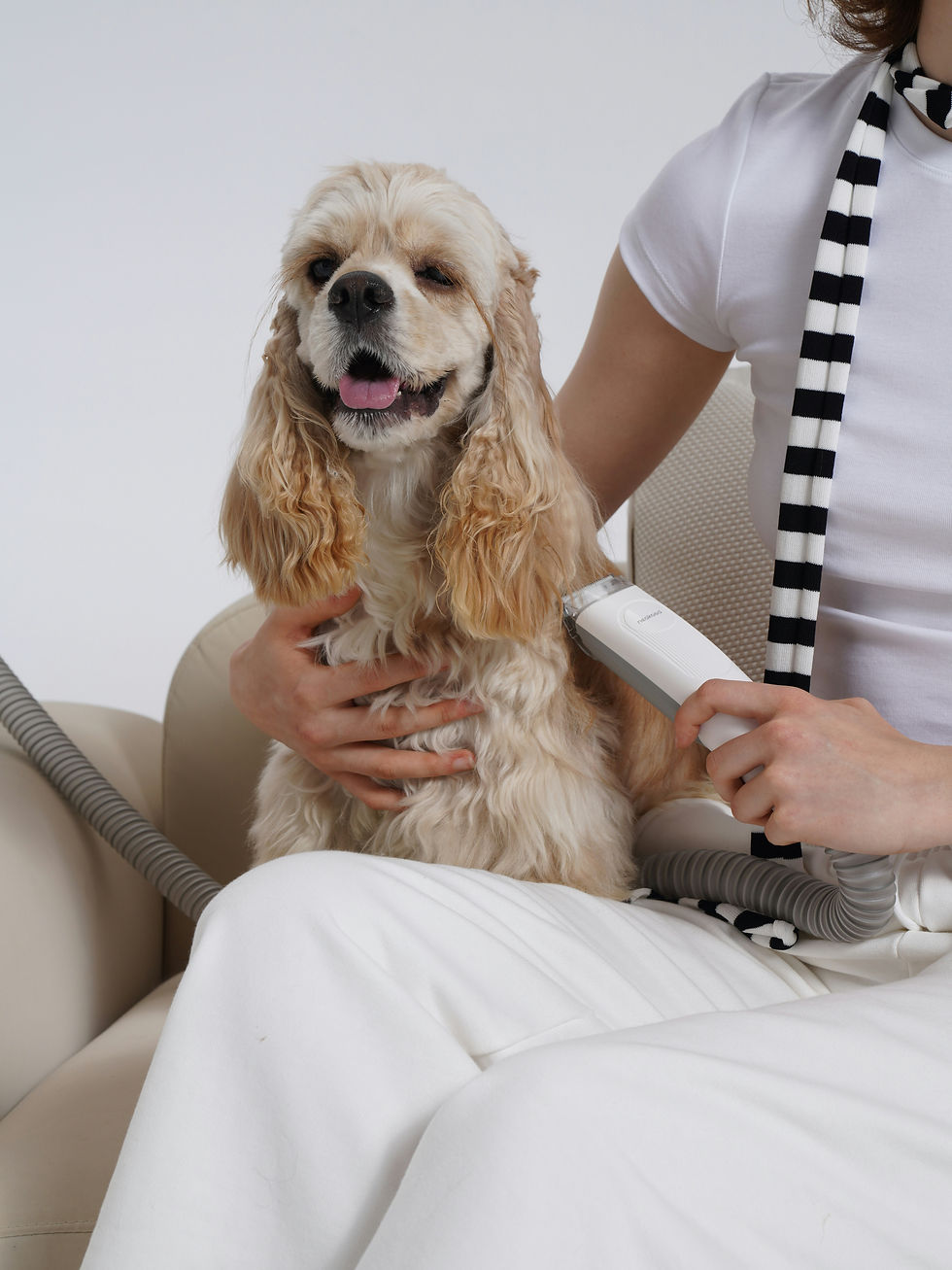
Day 16 — Practice Body Handling
Prepare your dog for grooming and veterinary care before they need it.
Practice calmly touching paws, ears, legs, mouth, and tail. Brush them. Examine their teeth. Practice the motions associated with nail trims and vet exams.
Pro Tip: An electric toothbrush can be used on the coat and around the paws to introduce the sound and vibration of grooming equipment. This can help prepare dogs for clippers used during grooming or the vibration of a Dremel during nail care.
Never use this exercise to frighten or overwhelm your dog. Build tolerance gradually and pair handling with positive experiences.

Day 17 — Build Engagement Before Distractions
If your dog can't focus on you in your living room, expecting perfect engagement at a busy farmers market isn't realistic.
Start somewhere easy.
Build strong name recognition, eye contact, recalls, and engagement before gradually increasing environmental difficulty.
Day 18 — Use the 3 Ds of Dog Training
When you're increasing the difficulty of a behavior, remember:
1. Duration2. Distance3. Distraction
Build them in that order.
First, teach your dog to hold the behavior longer.
Then begin adding distance.
Finally, introduce distractions gradually.
Don't expect your dog to hold commands around major distractions if you haven't built duration and distance first.
Day 19 — Train in New Places
Dogs don't automatically generalize behaviors.
Your dog may have an amazing Down at home and suddenly seem to "forget" everything at the park.
They didn't necessarily forget — the environment changed.
Practice at parks, pet-friendly stores, restaurant patios, beaches, farmers markets, sidewalks, and other appropriate public environments.
New smells, surfaces, noises, people, and activity levels help proof your dog's training.

Day 20 — Give Your Dog a Job
Dogs were bred to work alongside humans.
Give that brain something productive to do!
Try scent work, agility, retrieving, dock diving, trick training, puzzle work, or another activity suited to your individual dog.
A "job" doesn't have to be professional work. It simply gives your dog an appropriate outlet for their instincts and energy.
Day 21 — Advocate for Your Dog
Responsible ownership also means being willing to say:
"No, you can't pet my dog."
Your dog doesn't owe strangers affection.
If your dog is nervous, overwhelmed, training, recovering, or simply doesn't enjoy an interaction, advocate for them.
Sometimes being a responsible owner means being willing to disappoint another human to protect your dog's comfort and safety.
WEEK 4: TURN TRAINING INTO A LIFESTYLE
Day 22 — Stop Rewarding Jumping
Attention itself can be rewarding.
Eye contact, talking, touching, and even pushing a dog away can unintentionally give a jumping dog exactly what they wanted: interaction.
Instead, calmly claim your space and redirect the dog into a behavior such as Sit before affection happens.
If guests struggle to follow the rules, set your dog up for success. Use a leash, Place, gates, or another management strategy and ask guests to ignore the dog until they're calm.

Day 23 — Practice Calm Greetings
Greetings don't need to be chaotic.
Teach your dog that calm behavior makes interaction happen.
Use a leash when necessary. Ask for a Sit. Reward calmness. If excitement becomes too high, create distance and reset.
And remember: not every dog needs to greet every dog or every person.
Day 24 — Exercise the Brain
A physically exhausted dog isn't automatically a fulfilled dog.
Add mental exercise through scent work, puzzle feeders, obedience, shaping games, hide-and-seek, trick training, food searches, and problem-solving activities.
Sometimes ten focused minutes of mental work can accomplish more than another repetitive round of physical exercise.

Day 25 — Build Confidence — Don't Force It
Confidence isn't created by dragging a fearful dog toward something scary.
Create successful experiences instead.
Give your dog enough distance to observe without becoming overwhelmed. Reward curiosity. Allow them to investigate at an appropriate pace.
Confidence grows when your dog repeatedly learns:
"I can handle this."
Day 26 — Make Training Part of Life
You don't need to schedule an hour-long training session every day.
Train while making coffee.
Practice Place while cooking.
Ask for a Wait before opening the door.
Practice recalls in the backyard.
Work on body handling while watching TV.
Ask for engagement during your walk.
Two to five minutes sprinkled throughout the day adds up quickly.
Training shouldn't just be something you do. It should become part of how you live with your dog.
Day 27 — Freedom Is Earned
If your dog isn't ready to make good decisions with unlimited freedom, give them more structure.
Leashes, long lines, crates, gates, playpens, and Place aren't punishments.
They're management tools.
As reliability increases, freedom increases.
Giving too much freedom too quickly can allow unwanted behaviors to become habits. Set your dog up to succeed first.

Day 28 — Meet the Dog in Front of You
There is no single training plan that works identically for every dog.
Age matters.
Breed matters.
Genetics matter.
Temperament matters.
Past experiences matter.
Motivation matters.
Energy level matters.
A young working-breed dog may need something completely different from a senior companion dog. A fearful rescue may progress differently from a confident puppy.
Don't train the dog you saw on social media.
Don't train the dog you owned ten years ago.
Train the dog standing in front of you today.
Day 29 — Take Your Training Into the Real World
Your dog doesn't live in your living room.
Eventually, training needs to leave it too.
Once your foundation is solid, begin practicing around real-life distractions. Start somewhere manageable and gradually work toward more difficult environments.
The goal isn't simply a dog who knows commands.
It's a dog who understands those commands when life is actually happening.
DAY 30 — CELEBRATE YOUR DOG'S SUCCESS
You made it!
Before immediately focusing on everything that still needs improvement, look back at where you started.
Maybe your dog can wait at the door now.
Maybe walks are easier.
Maybe their recall improved.
Maybe they settle faster.
Maybe you learned how to communicate with them more clearly.
Maybe the biggest improvement is simply that you've become more consistent.
Those wins matter.
Then ask yourself:
What are we going to accomplish next month?
Choose two or three realistic goals and create a plan to continue building on the progress you've already made.
Because Day 30 shouldn't be the end of training.
It should be the beginning of the next 30 days.

Responsible Dog Ownership Is a Lifetime Commitment
There is no "finished" dog.
Dogs grow. Environments change. Puppies become adolescents. Adults become seniors. Families move, routines change, new challenges appear, and training needs evolve throughout a dog's lifetime.
Responsible ownership means continuing to meet the dog in front of you and giving them the communication, boundaries, enrichment, advocacy, and guidance they need at each stage of life.
You don't need perfection.
You need consistency, patience, realistic expectations, and a willingness to keep learning alongside your dog.
So this September, don't worry about completely transforming your dog in 30 days.
Instead, commit to doing one intentional thing every day.
Thirty small choices can create some pretty incredible changes.
🐾 Better training. Stronger bonds. More freedom.
Run Free K9Enhancing K9 Health & Happiness Through Fun & Effective Training
📞 804-401-5610🌐 www.runfreek9.com


Comments