
Pet Obesity Awareness Day: How Much Should We REALLY Be Feeding Our Dogs?

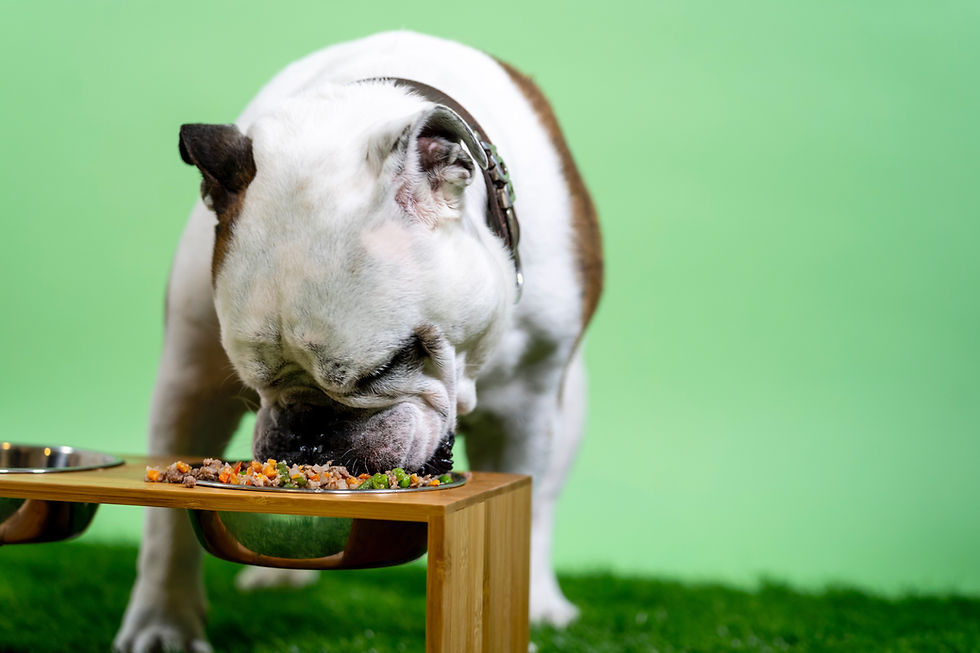
When I ask owners how much their dog eats, I often hear something like:
“Two cups a day.”
But here's the problem: a cup isn't a nutritional measurement. Calories are.
One dog food might contain 300 calories per cup, while another contains 500. Add training treats, dental chews, bully sticks, table scraps, stuffed Kongs, toppers and the occasional “just one little bite,” and a dog can consume hundreds of calories beyond what their owner realizes.
For Pet Obesity Awareness Day, let's talk about what actually goes into determining how much your dog should eat—and why the answer on the back of the food bag isn't necessarily the right answer for your dog.
Start With Calories, Not Cups
A dog's calorie requirements depend on much more than weight. Age, whether they're intact or altered, activity, breed, body condition, muscle mass, environment and individual metabolism all affect their needs. Two 50-pound dogs can therefore need surprisingly different amounts of food. Merck notes that individual dogs may require roughly 30% more or less than a calculated estimate, which is why calorie formulas should always be treated as starting points.
A common starting point is the dog's Resting Energy Requirement (RER):
RER = 70 × (body weight in kilograms)^0.75
We then multiply that number by a life-stage/activity factor to estimate daily calories. AAHA and Merck, for example, use approximately 2× RER for puppies over 4 months and 3× RER for puppies under 4 months, while adult requirements vary substantially with activity and other factors.
Now, if your like me and that formula makes your brain hurt, don't worry. Simply ask your veternarian how many calories your dog should be eating, or use a calorie calculator on google to get started.
Estimated Daily Calorie Guide
Here's a practical starting-point chart for healthy dogs at an ideal body condition:
Dog's Weight | Puppy >4 mo.* | Adult / Moderate | Senior or Low Activity** | High Activity*** |
20 lbs | ~730 kcal | ~585 kcal | ~440 kcal | ~730+ kcal |
30 lbs | ~990 kcal | ~795 kcal | ~595 kcal | ~990+ kcal |
40 lbs | ~1,230 kcal | ~985 kcal | ~740 kcal | ~1,230+ kcal |
50 lbs | ~1,455 kcal | ~1,165 kcal | ~875 kcal | ~1,455+ kcal |
60 lbs | ~1,670 kcal | ~1,335 kcal | ~1,000 kcal | ~1,670+ kcal |
Puppies under approximately 4 months may need closer to 3× RER, so their requirements can be substantially higher.*There isn't one universal “senior multiplier.” Senior dogs often require fewer calories as activity and energy requirements decrease, but some seniors need more nutritional support because of muscle or weight loss.***Working and athletic dogs can require considerably more than this. AAHA's work-dog factors range from roughly 1.6–2× RER for light work to much higher levels for moderate and heavy work.
These are starting estimates, not feeding prescriptions. Medical conditions, pregnancy, growth, obesity and weight-loss programs should be handled with your veterinarian.
But What About Treats, Bones & Chews?
This is where I see calorie counting fall apart.
Let's say your dog needs approximately 800 calories per day, and their kibble contains 400 calories per cup.
It's tempting to say:
800 ÷ 400 = 2 cups per day.
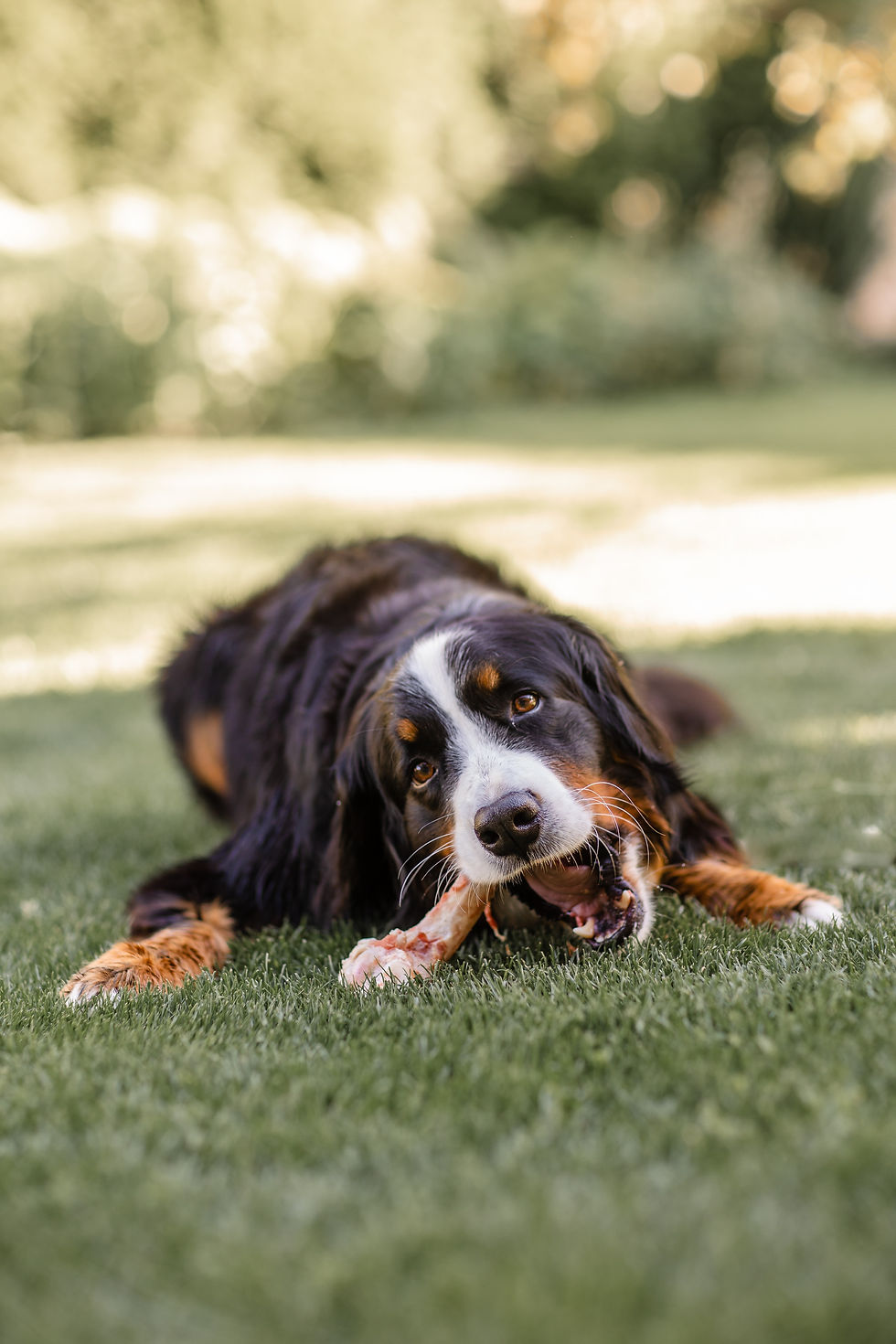
Except your dog also gets treats during training, a dental chew after dinner and part of a chew while you're watching TV.
Those calories count too!
AAHA recommends that at least 90% of a dog's calories come from their complete and balanced diet, leaving no more than about 10% for treats and other extras. That includes treats, table food, chews and food used to give medication. So if your dog's target is 800 calories/day, your treat budget is roughly:
80 calories.
That isn't 800 calories of kibble plus 80 calories of treats.
It's approximately:
720 calories complete diet + up to 80 calories extras = 800 total calories.
That distinction matters!
Start Reading Treat Labels

Flip the bag over and look for kcal per treat.
If one treat contains 25 calories and your dog's treat allowance is 60 calories, giving six of them isn't “just six little treats.”
That's 150 calories.
For a smaller dog, that can represent a surprisingly large portion of their entire day's energy requirement.
And don't forget:
Bully sticks and other edible chews, training treats, dental chews, peanut butter, cheese, table scraps, fruits and vegetables, food used to hide medication, meal toppers, supplements that contain calories..
It all counts.
Treat Replacement Options for Weight Loss in Dogs
When looking to help your dog lose weight, substituting high-calorie treats with healthier options is a great strategy. Here are some nutritious vegetable and fruit alternatives that can serve as low-calorie treats:
Vegetable Treats
Green Beans: Fresh or steamed green beans are low in calories and high in fiber, making them a great crunchy snack.
Carrots: Raw carrots are low in calories and provide a satisfying crunch. They are also rich in vitamins.
Sweet Potatoes: Cooked and mashed sweet potatoes can be a delicious treat. Just be mindful of portion sizes, as they are higher in calories than some other veggies.
Cucumber: Sliced cucumbers are refreshing and low in calories, perfect for hydration and a crunchy snack.
Broccoli: Raw or lightly steamed broccoli can be a nutritious treat, packed with vitamins and minerals.
Peas: Fresh or frozen peas can be a fun and nutritious snack for dogs, providing fiber and protein.
Fruit Treats
Apple Slices: Remove the seeds and core, and offer apple slices as a sweet treat. They are crunchy and provide vitamins A and C.
Blueberries: These small berries are low in calories and high in antioxidants, making them a great option for a treat.
Watermelon: Seedless watermelon chunks can be a hydrating treat; just be cautious with the portion size.
Bananas: While higher in calories than some other fruits, small pieces of banana can be given occasionally as a tasty reward.
Pineapple: Fresh pineapple chunks can be a sweet and tropical treat. Ensure that the core and skin are removed before serving.
An Easy Trick for Dogs Who Train Frequently
Instead of constantly adding treats on top of your dog's meals, use part of their measured daily kibble for training.
If your dog normally eats two cups per day, put some of that food into your training pouch in the morning.
Now you're rewarding recalls, leash engagement, place work and good choices without automatically adding hundreds of extra calories.
For higher-value situations, mix a small number of higher-value treats into the kibble.
Stop Letting the Food Bag Decide Everything
Feeding recommendations on a bag are useful starting points, but they don't know your dog.
They don't know that your Lab spends three hours hiking every weekend.
They don't know that your senior Shepherd sleeps most of the afternoon.
They don't know your dog gets 200 calories worth of treats during training.
And they don't know your dog's body condition.
AAHA recommends monitoring body weight, Body Condition Score (BCS), and Muscle Condition Score (MCS) rather than relying solely on package feeding instructions.
For most dogs, an ideal BCS is approximately 4–5 out of 9. You should generally be able to feel the ribs without a heavy layer of fat and see a waist when looking down from above.
Simple Habits That Can Help Prevent Obesity
Weigh your dog regularly. I love the idea of stopping by your vet about once a month for a quick weight check if they'll allow it. Write the number down so gradual changes don't sneak up on you.
Measure every meal. Don't eyeball portions. For even better accuracy, weigh food on a kitchen scale.
Know your food's kcal per cup or kcal per gram.
Create a daily treat allowance. Put that day's treats into one container. When they're gone, they're gone.
Use meal calories for training.
Feed dogs separately in multi-dog homes so one dog isn't finishing everybody else's dinner.
Don't confuse begging with hunger. Food-seeking behavior doesn't automatically mean your dog needs more calories.
Keep them moving. Walks, hiking, swimming, play and training all help—but you generally can't out-exercise chronic overfeeding.
Recalculate as your dog changes. Puppy → adult → senior, spay/neuter, injury and changes in activity can all change calorie requirements.
Watch the dog, not just the number. Weight, BCS and muscle condition together give you a much better picture.
Food Is Love—but So Is Portion Control

We love our dogs, and feeding them feels good.
That extra biscuit.
The end of our sandwich.
A big chew because they've been good.
A scoop that accidentally turns into a heaping scoop.
None of those things seem significant individually—but calories accumulate quietly.
Keeping your dog lean isn't about depriving them. It's about giving them the amount of energy their body actually needs while finding other ways to show them love.
Go for the walk.
Play the game.
Take the training adventure.
Give them five tiny pieces instead of one giant treat.
And every once in a while, put your hands on your dog and ask yourself:
Can I easily feel those ribs? Can I see a waist? Has their weight slowly been creeping upward?
Sometimes the most loving thing we can put in our dog's bowl is simply the right amount.
Run Free K9 Enhancing K9 Health & Happiness Through Fun & Effective Training
📞 804-401-5610🌐 RunFreeK9.com
For a personalized calorie target—especially for a growing puppy, overweight dog, senior losing muscle, or dog with a medical condition—work with your veterinarian or nutrition professional such as Run Free K9.


Comments