
Fall Into Enrichment: 10 Ways to Make Autumn More Exciting for Your Dog


Cooler weather, colorful leaves, and endless opportunities to keep your dog's mind and body active!
Fall is finally here! The temperatures are cooling down, the leaves are changing, and it's the perfect time to get outside and enjoy some adventures with our four-legged companions.
Here in South Carolina, where our summers can be brutally hot and humid, autumn brings some much-needed relief for both dogs and their owners.
But fall isn't just a great time for longer walks. It's also an incredible opportunity to introduce new enrichment activities that challenge your dog's mind, encourage natural behaviors, and strengthen your relationship.
As a canine behavior trainer, one of the biggest things I emphasize to my clients is that physical exercise and mental enrichment are not the same thing.
You can walk your dog for miles, play fetch until your arm hurts, or let them run around the backyard for hours, and still have a dog who struggles to settle down.
Why?
Because physical exhaustion doesn't always equal mental fulfillment!
Dogs need opportunities to sniff, explore, investigate, problem-solve, and engage in natural behaviors.
And the best part? Enrichment doesn't have to be expensive, complicated, or time-consuming.
Let's explore 10 fun fall-themed enrichment activities you can enjoy with your dog this season!

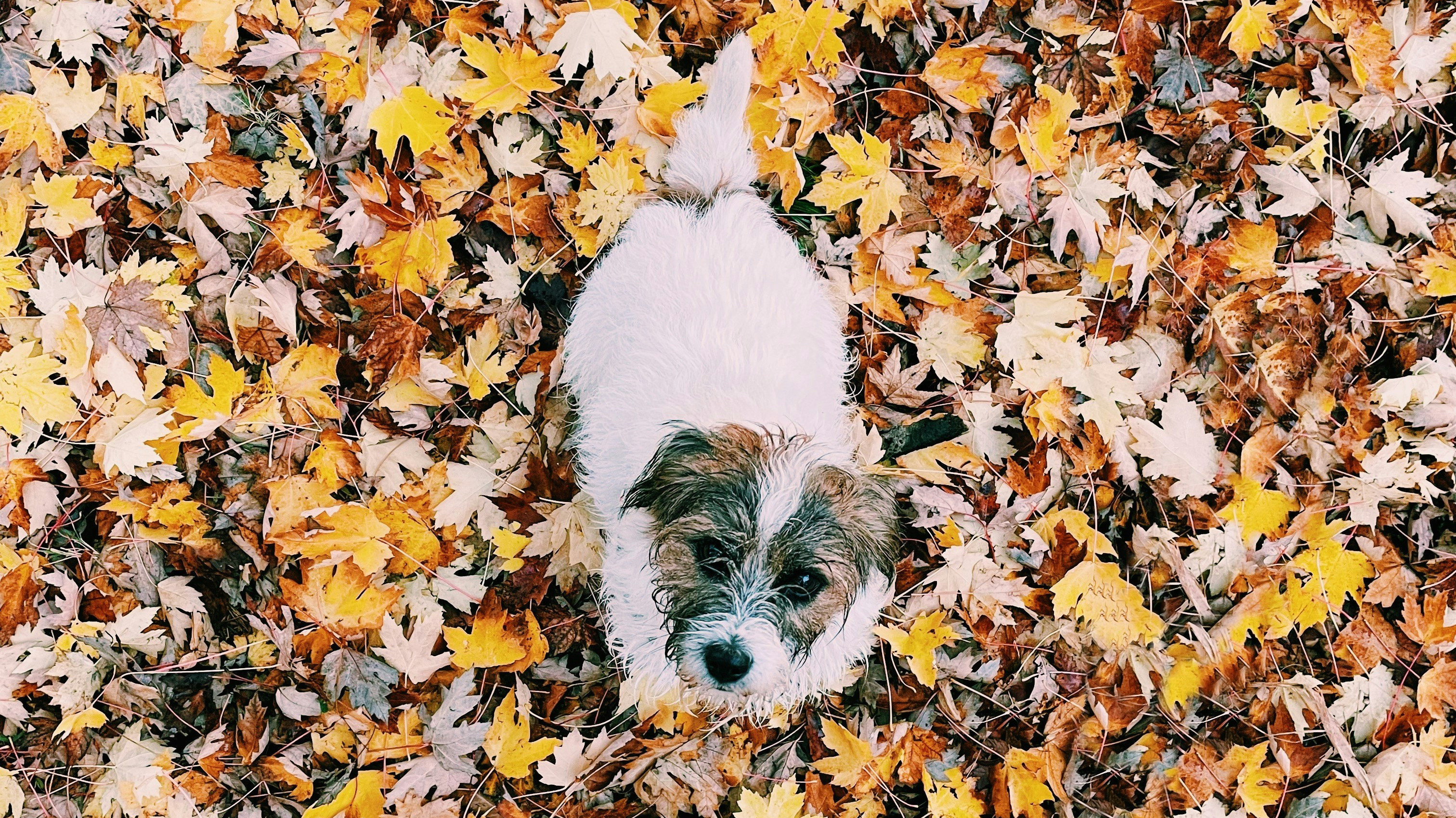
1. Leaf Pile Treasure Hunts
Who says leaf piles are just for kids?
One of my favorite ways to encourage natural sniffing behavior is by turning an ordinary pile of fallen leaves into a treasure hunt.
Dogs have an incredible sense of smell, and scent-based activities allow them to use one of their most powerful natural abilities.
How to play:
Gather a small pile of clean, dry leaves in your yard.
Scatter a handful of your dog's favorite treats throughout the pile.
Encourage your dog to investigate using a cue such as "Search!"
Allow them to sniff and locate the hidden rewards at their own pace.
Gradually increase the difficulty by hiding treats deeper or spreading them across a larger area.
For dogs who already enjoy scent work, you can even hide a favorite toy in the leaves!
Training tip: Avoid pointing out every treat or helping your dog too quickly. Give them an opportunity to work through the challenge independently.
Allowing dogs to solve problems on their own can help build persistence, confidence, and independence.
Safety reminder: Use only clean leaves from areas free of pesticides and chemicals. Avoid piles containing mushrooms, sharp debris, or potentially dangerous plants. Supervise dogs who may eat leaves or other outdoor materials.
2. Pumpkin Puzzle Time!
Pumpkins aren't just for carving!
Plain, cooked pumpkin can be a delicious addition to many dogs' enrichment activities, and its soft texture makes it perfect for food puzzles and lick mats.
Try spreading a small amount of plain pumpkin puree onto a lick mat, mixing it with part of your dog's regular food, or stuffing it inside a food-dispensing toy.
For an extra challenge, freeze the enrichment toy before offering it.
This encourages your dog to work a little longer for their reward.
You can also make a fall-themed food puzzle by combining:
Plain pumpkin puree
A small portion of your dog's regular kibble
A few dog-safe treats
A little water to adjust the consistency
Mix everything together and place it in a suitable enrichment toy.
Important: Make sure you're using 100% plain pumpkin, not pumpkin pie filling. Pumpkin pie filling may contain added sugar, spices, or other ingredients that aren't appropriate for dogs.
And remember, enrichment calories still count!
I frequently remind my clients that treats, chews, and food puzzles should be considered part of their dog's daily calorie intake.
Whenever possible, use a portion of their regular meals instead of adding unnecessary calories.
3. Take a Sniffari Instead of a Regular Walk

Sometimes the best walk isn't the longest one.
It's the one where your dog gets to use their nose!
I often explain to clients that there is a big difference between a structured walk and a freedom walk.
During a structured walk, we're focusing on engagement, leash manners, and responding to the handler.
During a freedom walk, we're allowing our dogs more opportunities to explore, sniff, and investigate their environment.
Both have value!
This fall, try taking your dog on a dedicated Sniffari.
Choose a quiet trail, park, or pet-friendly outdoor area and allow your dog to explore at a relaxed pace.
Instead of worrying about how far you walk, focus on the quality of the experience.
Let your dog investigate interesting smells, pause at trees, and explore the environment safely.
For dogs with reliable leash manners, a 10–20-foot long line can provide additional freedom in appropriate areas.
Just remember to use a secure, suitable setup, maintain awareness of your surroundings, and follow local leash regulations.
Training tip: Practice switching between structured walking and freedom walking.
For example, use your "Close" command when you need your dog walking beside you, then release them with "Break" when it's time to explore.
This teaches your dog that freedom and structure can work together.
4. Build a Backyard Fall Obstacle Course
You don't need expensive agility equipment to create an exciting enrichment activity.
Your backyard may already contain everything you need!
Try creating a simple obstacle course using safe household items.
Ideas include:
Walking around pumpkins or cones
Stepping over low broomsticks
Weaving between chairs
Walking across different stable surfaces
Crawling under a safely supported obstacle
Practicing a place command on different platforms
For puppies, seniors, or dogs with mobility limitations, keep everything low-impact and appropriate for their physical abilities.
Here's where the real enrichment comes in:
Instead of simply dragging your dog through the course with a treat, allow them to investigate the obstacles.
Reward curiosity, voluntary movement, and problem-solving.
For nervous dogs, even approaching a new object or placing one paw on an unfamiliar surface can be a huge accomplishment.
You don't need to rush the process.
The goal isn't speed or perfection. It's confidence, coordination, and engagement.
5. Play Fall-Themed Hide-and-Seek
Hide-and-seek is one of my favorite games because it combines mental stimulation, physical movement, and recall training.
And it's incredibly easy to play!
Start inside your home or in a secure outdoor area.
Have someone hold your dog while you hide somewhere nearby.
Once you're ready, call your dog enthusiastically.
When they find you, celebrate!
Offer treats, praise, or a favorite toy.
As your dog becomes more successful, increase the difficulty by hiding farther away or behind different objects.
You can also play a version where your dog searches for hidden toys rather than people.
Why I love this game:
It teaches dogs that paying attention to their owners can be exciting and rewarding.
It also encourages them to use their nose, problem-solving abilities, and natural desire to investigate.
For dogs who struggle with recall, this can be a fun way to build value in coming when called.
Just remember to keep the game positive and avoid calling your dog repeatedly if they aren't responding.
Set them up for success!
6. Turn Dinner Into a Fall Scavenger Hunt
Who says your dog needs to eat every meal from a bowl?
One of the simplest ways to add enrichment to your dog's day is by making them work for their food.
Instead of pouring dinner into a bowl, try scattering part of their kibble across a safe grassy area.
Allow your dog to use their nose to locate each piece.
For a more challenging version, hide small portions of food in different locations around the yard or home.
You can even create a fall-themed indoor scavenger hunt using cardboard boxes, towels, and food puzzles.
Training tip: Start easy!
If your dog has never played scent-based food games, begin by scattering kibble in plain sight.
As they become more confident, gradually make the food harder to locate.
Remember that enrichment should be challenging enough to encourage problem-solving without becoming so difficult that your dog gives up in frustration.
For dogs who struggle with resource guarding, manage food activities carefully and keep other pets separated.
7. Explore New Fall Environments

Sometimes enrichment is as simple as going somewhere new.
Dogs experience the world primarily through their senses, so even a short visit to an unfamiliar location can provide an entirely different experience.
Fall is a wonderful time to explore!
Consider visiting:
Quiet nature trails
Pet-friendly pumpkin patches
Local parks
Dog-friendly outdoor shopping areas
New walking routes
Open grassy areas with interesting smells
You don't necessarily need to spend an hour at each location.
For some dogs, a short 10–15-minute exploration is plenty.
A reminder for owners of reactive or fearful dogs:
New environments should be introduced thoughtfully.
Taking an insecure dog directly into a crowded fall festival may create more stress than enrichment.
Instead, choose quieter locations where your dog can observe the environment comfortably.
You can gradually introduce busier settings as their confidence and skills improve.
Remember, the goal is to create positive experiences, not simply expose your dog to as many things as possible.
8. Create a Fall-Themed Destruction Box
Does your dog love shredding paper, tearing apart toys, or digging through things?
Instead of constantly trying to stop these natural behaviors, consider giving them an appropriate outlet!
A supervised destruction box can be a fantastic enrichment activity for dogs who enjoy tearing and investigating.
Start with a cardboard box and fill it with dog-safe items such as:
Crumpled plain paper
Empty cardboard tubes
Small cardboard boxes
A few hidden treats
Pieces of your dog's regular kibble
Allow your dog to investigate, move items around, and tear apart the cardboard to find their rewards.
For an extra challenge, place treats inside smaller boxes before adding them to the larger container.
Safety first: This activity is best for dogs who enjoy shredding but don't swallow the materials. Supervise closely, remove staples, tape, and other hazards, and discontinue the activity if your dog attempts to ingest cardboard or paper.
Not every enrichment activity is appropriate for every dog.
That's why it's important to understand the individual dog in front of you!
9. Practice the Art of Doing Nothing Outdoors

This might sound like the most boring enrichment activity on the list, but it's one of my favorites!
Sometimes the best thing we can teach our dogs is how to relax and simply observe the world.
Many dogs become accustomed to constant entertainment.
They're always walking, playing, training, chasing, or interacting.
But learning to settle calmly is an incredibly valuable life skill.
Take advantage of the cooler fall weather by setting up a comfortable spot outside.
Bring a blanket or portable dog bed, some water, and perhaps a long-lasting chew.
Then simply sit together.
You might choose a quiet park, your backyard, or a peaceful outdoor seating area.
Allow your dog to observe the environment without expecting them to interact with everything happening around them.
Reward relaxed behavior when appropriate, but don't feel the need to constantly ask for commands.
This is what I call the art of doing nothing.
For hyperactive dogs, this can be surprisingly challenging!
Start with short sessions in quiet environments and gradually increase the duration and distractions.
Over time, your dog can learn that not every outing needs to be an exciting adventure.
Sometimes it's perfectly okay to just exist together.
10. Create a Fall Adventure Challenge!
Want to make enrichment even more exciting?
Turn it into a weekly challenge!
Choose a different activity each day and encourage your dog to try something new.
Here's an example of a seven-day fall enrichment challenge:
Day | Activity |
Monday | Leaf pile treasure hunt |
Tuesday | Pumpkin lick mat |
Wednesday | 20-minute sniffari |
Thursday | Backyard obstacle course |
Friday | Hide-and-seek recall game |
Saturday | Explore a new location |
Sunday | Relaxation and the art of doing nothing |
You can repeat the challenge throughout the season, changing the activities and increasing the difficulty as your dog becomes more confident.
Don't worry if your dog isn't successful at every activity right away.
Enrichment isn't a competition!
Some dogs love scent games, while others prefer physical challenges or quiet exploration.
The goal is to discover what your individual dog enjoys and provide healthy outlets for their natural behaviors.
Why Enrichment Matters More Than You Think
As a trainer, I frequently work with dogs whose owners tell me:
"My dog gets plenty of exercise, but they're still bouncing off the walls!"
Or:
"I walk my dog every day, but they still get into everything!"
While these behaviors can have many different causes, one thing I often encourage owners to evaluate is whether their dog is receiving enough meaningful mental stimulation.
A dog can be physically tired and still have unmet behavioral needs.
Dogs were bred for jobs ranging from hunting and herding to retrieving, tracking, and guarding.
Although many of our dogs now spend their days as beloved household companions, they still possess the instincts and drives that make them who they are.
When we provide appropriate outlets for those behaviors, we give our dogs opportunities to engage with the world in satisfying ways.
Enrichment can help:
Reduce boredom-related destructive behavior
Encourage independent problem-solving
Build confidence in insecure dogs
Provide healthy outlets for natural instincts
Strengthen communication between dogs and their owners
Support relaxation and emotional well-being
Make everyday routines more interesting
But here's something important to remember:
More enrichment isn't always better.
Dogs also need adequate sleep, downtime, and opportunities to settle.
A dog who is constantly stimulated may struggle just as much as a dog who doesn't receive enough activity.
The goal is balance.
A healthy routine should include physical exercise, mental enrichment, training, social opportunities appropriate for the individual dog, and plenty of rest.
Final Thoughts: Make This Fall About More Than Just Walks
Autumn is a beautiful time to slow down, get outside, and enjoy the world with your dog.
You don't need expensive toys, elaborate equipment, or hours of free time to provide meaningful enrichment.
Sometimes all it takes is a handful of kibble hidden in the grass, a new trail to explore, or a quiet afternoon enjoying the cooler weather together.
The most important thing is learning what motivates your dog and finding creative ways to meet their individual needs.
At Run Free K9, I always encourage owners to think beyond traditional obedience training.
Because training isn't just about teaching your dog to sit, stay, or walk nicely on a leash.
It's about helping them become confident, fulfilled companions who know how to navigate the world successfully.
And sometimes the simplest activities create the biggest improvements.
So grab your leash, enjoy the fall weather, and give your dog something new to sniff!
Want to Do More With Your Dog but Don't Know Where to Start?
Does your dog struggle with boredom, excessive energy, destructive behavior, or difficulty settling down?
Are you looking for ways to build confidence, improve engagement, or make your daily training routine more enjoyable?

At Run Free K9, we believe training should be both fun and effective!
We help owners understand their dogs' individual needs while developing practical training skills, confidence-building exercises, and enrichment activities that fit their lifestyle.
Whether you're raising an energetic puppy, working with a nervous rescue, or looking to take your dog's training to the next level, we're here to help.
Run Free K9
Enhancing K9 health & happiness through fun & effective training.
Website: RunFreeK9.com
Phone: 804-401-5610
Because a happy dog isn't just a tired dog. It's a dog whose mind, body, and natural instincts are being fulfilled! 🐾🍂


Comments